
In Italy, the morning doesn’t begin with coffee. It begins at the bar.
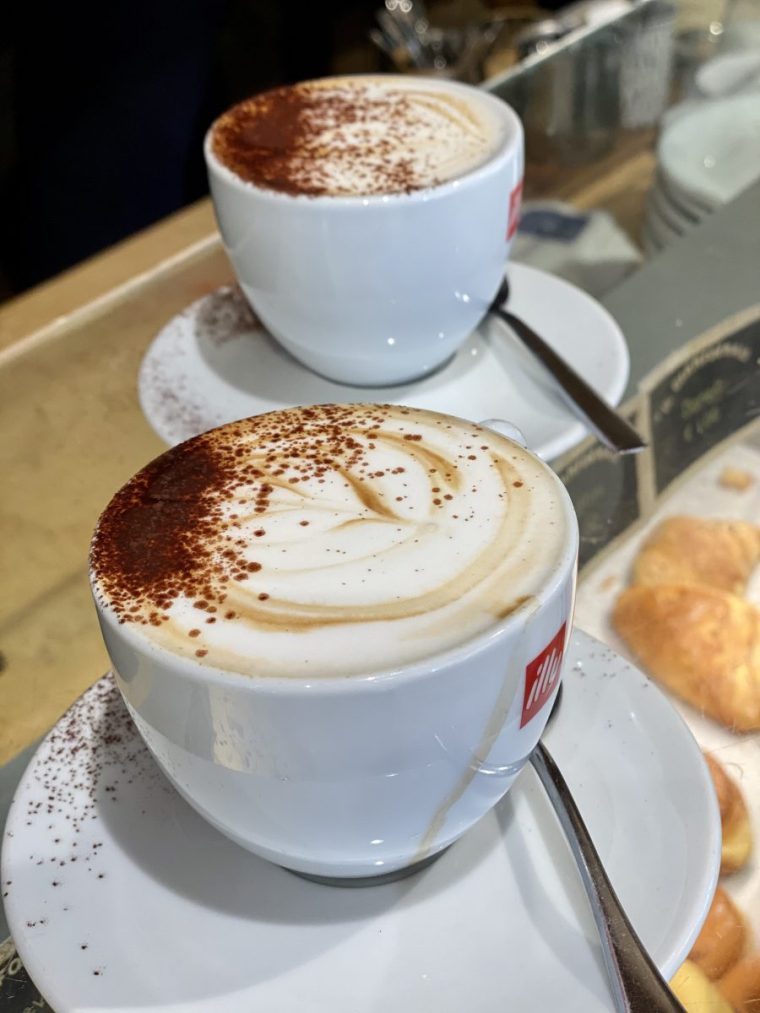
The dapper barista steamed the milk with precision, poured the creamy froth over the shot of robust espresso in a rhythmic swaying motion, then slid the cappuccino onto the counter with a slight nod. As I sipped it, I tasted Italy. The day officially began.
The taste stayed with us both through the afternoon, which is how we found ourselves returning to Il Gianfornaio in Testaccio for a second cappuccino — at which point we encountered his colleague, who made it quite clear, without a word of English, that ordering milk in coffee past the morning hours is a mark of foreigners who don’t know the rules.
He wasn’t wrong. We came back the next morning, and the morning after that, and the one after that. By the final day the two men greeted us like regulars — with a touch of humor, even — already anticipating the order. The colleague had warmed to us, or at least to our evident appreciation of what they were doing. We thanked them both as we left for the last time. We knew we’d miss their particular sense of perfection in their craft.
Caffè, Coffee in Italy
An Italian day starts with coffee. The daily ritual begins in il caffè or il bar — terms used somewhat interchangeably. Both locales serve coffee and alcohol, but the café opens earlier, serving breakfast pastries and sandwiches, while the bar shifts later to aperitivo and wine. Together they bracket the Italian day at both ends.
La colazione, breakfast, is a light affair: a cappuccino with a cornetto, the Italian croissant. After lunch, a macchiato. Before and after dinner, an espresso. The sequence is not a preference — it is a digestive logic that Italians follow with the kind of quiet conviction that makes asking for a cappuccino at 4pm a recognizable act of foreignness.
Most Italians stand at the bar for their coffee. It costs double to sit at a table — and considerably more in a tourist piazza, though usually still less than Starbucks. You won’t find a Starbucks in Rome anyway. Italian coffee culture doesn’t accommodate it. Italians are coffee aficionados who uphold a higher standard for quality and expect more reasonable prices. They are purists — not snobby, just no-nonsense — who would never supersize an espresso or lace it with sugary syrups.
It all starts with the beans. Master roasters ensure they are darkly roasted to a rich brown without burning, with little to no surface oil. The beans are very finely ground just before brewing to maintain optimal freshness, then brewed under high pressure to produce a beverage with deep body and a thin crema — the creamy layer on top of a well-pulled espresso. Each coffee is served in its own precise ceramic or glass cup. There are no small, medium, or large paper cups here.


Ordering Coffee in Italy
Italy is home to espresso. The first Italian coffeehouse opened in Venice in the 17th century, quickly spreading throughout the country, after trade had introduced coffee from the Middle East in the 16th century. That history is present every morning at the bar.
The main drinks to know:
- Espresso (caffè): a single 25ml shot in a tiny cup, often served with a small glass of water. The high pressure creates the crema on top. Order it simply: “Un caffè per favore.” Acceptable at any time of day. Variations include caffè lungo (longer, weaker pull), caffè ristretto (shorter, stronger pull), doppio espresso (double shot), and caffè con panna (with a dollop of whipped cream).
- Cappuccino: espresso in a 150ml cup with a 4:1 ratio of frothed milk, poured to create dark swirling patterns in the soft foam. Only at breakfast. “Vorrei due cappuccini per favore” — “May I have two cappuccinos, please.”
- Caffè macchiato: espresso with a splash of frothed milk. A good afternoon option.
- Lattè macchiato: frothed milk topped with espresso — the reverse ratio.
- Caffè latte: espresso with an 8:1 ratio of hot milk. Note that ordering “un latte” in Italy will get you a glass of milk.
- Caffè americano: espresso with added water, often served to tourists who want a longer drink.
- Caffè corretto: espresso with a shot of grappa or cognac — traditionally added to residual espresso after drinking.
- Caffè freddo / Shakerato: espresso shaken with ice until foamy, poured into a goblet or martini glass. The right move on a hot Roman afternoon.
Greet your barista in Italian first: “Buongiorno” or “Buonasera.” It shows respect for the language and the culture. Some bars have you pay first and hand your receipt to the barista; others you order first. Watch what others do, or ask: “Pago prima?” (“Do I pay first?”). Before you leave: “Grazie, buona giornata.”
Making Italian coffee at home.
Italians often brew their own coffee at home using a stovetop Moka caffettiera — the steel pot, circa 1960, that forces boiling water from a lower chamber up through the grounds into an upper pot. It doesn’t replicate high-pressure espresso, but it makes a full-bodied brew — particularly with quality Italian beans, typically 100% Arabica roasted to a specific high standard. We use Lavazza and have three sizes at home.
Italian Language Notes
Notes for English speakers: Though Standard Italian is the official language of Italy, there are thirty-four historical living languages and dialects throughout the country, such as Romanesco in Rome. Vowel sounds are consistent: ‘a’ [ah], ‘e’ [ay], ‘i’ [ee], ‘o’ [oh], ‘u’ [oo].
- In Standard Italian, a ‘c’ before an ‘e’ or ‘i’ says [ch], while a ‘c’ before an ‘a’, ‘o’, or ‘u’ says [k], as in cacio [kah’-chyō] and guanciale [gwan-chya’-lay]. For ‘c’ to make a [k] sound before an ‘e’ or ‘i’, an ‘h’ is added as in chitarra [key-tar’-rah] and porchetta [por-kayt’-tah]. A double consonant creates a slightly extended sound.
- Similarly, a ‘g’ before an ‘e’ or ‘i’ says [j], as in giudea [jew-day’-ah], while ‘gh’ before an ‘e’ or ‘i’, or ‘g’ before an ‘a’, ‘o’, or ‘u’ says [g], as in ghetto [gayt’-toe].
- An ‘sc’ before an ‘e’ or ‘i’ says [sh], as in prosciutto [pro-shoot’-toe], while ‘sch’ before an ‘e’ or ‘i’, or ‘sc’ before an ‘a’, ‘o’, or ‘u’ says [sk], as in bruschetta [brew-skayt’-tah].
- ‘z’ makes a [ts] sound, as in calzone [kal-tso’-nay]; double ‘zz’ slightly extends the sound, as in pizza [peet’-tsah].
Coffee connects to the Italy Atlas → Rome and the Food + Table perspective. Read about Roman pizza and pasta →

What the Romans Eat for Pizza
He wore a collared SS Lazio shirt tucked beneath his round belly, a sweatband on his wrist, and three pairs of glasses stacked on his head. He was our waiter, our pizza authority, and — as it turned out — our referee. Our desire to experience the Romans’ Rome began our first night in Testaccio,…

The Roman Pastas: Four Dishes, One City, No Substitutes
There are four pasta dishes that belong specifically to Rome, and to nowhere else in Italy. Each one tells you exactly where you are. Their origin is the cucina povera — the poor kitchen — of the shepherds and slaughterhouse workers who fed the city before it became famous for anything. They had offal, cured meat, hard…