
In Spain, the street is not a place you pass through on the way to somewhere else. It is the destination — and the evening is the proof.
Three Spanish words describe three distinct things. A paseo is an action: the traditional evening stroll, a social ritual practiced by people of all ages, the neighborhood out walking together at the same hour. A rambla is a physical space: a wide, tree-lined pedestrian boulevard, the stage on which the paseo most naturally unfolds. A tasca is an establishment: a small, casual tavern where wine or beer is poured and tapas plates are passed, usually in a room too small for the number of people who want to be inside it.
In practice, these three things collapse into each other. This is not a coincidence. It is the architecture of Spanish social life.

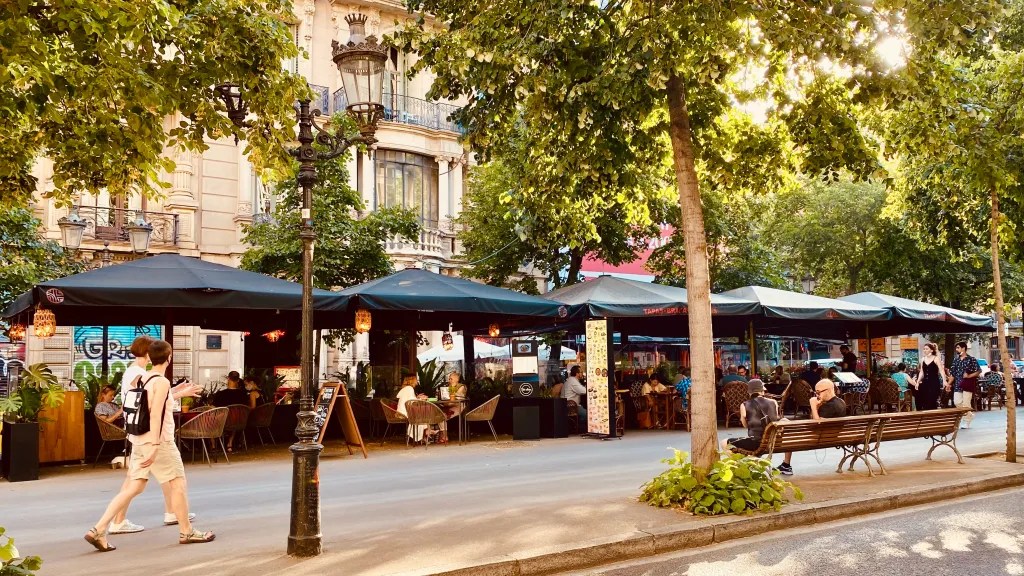
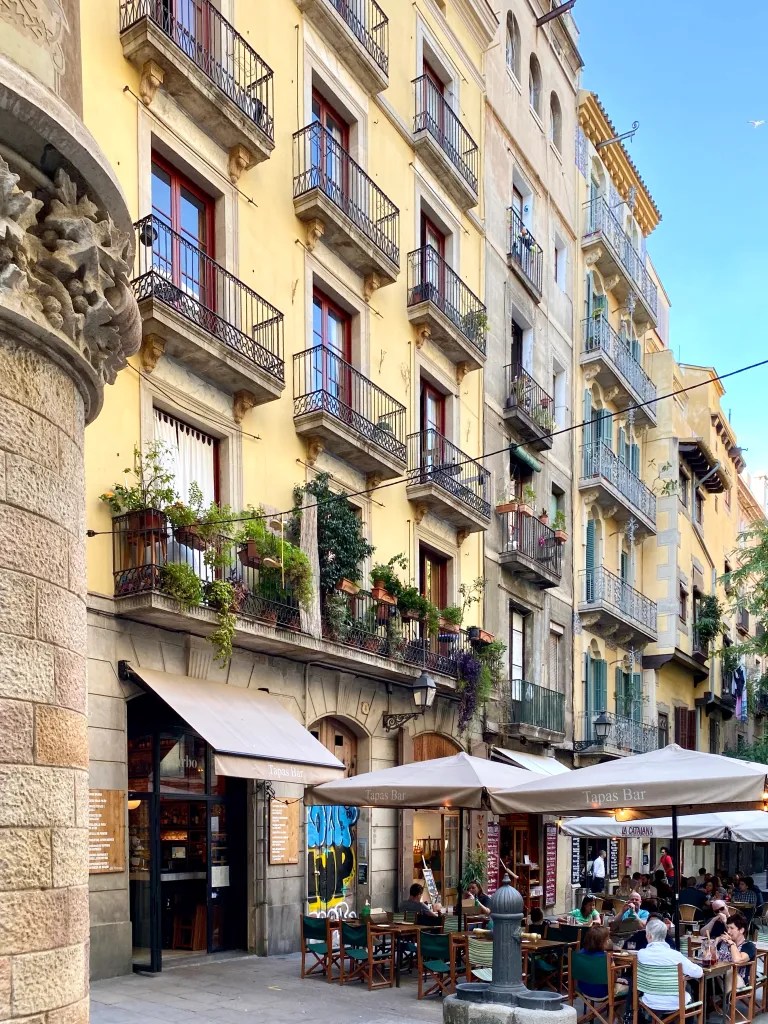
The paseo begins as the heat of the afternoon releases. Not everywhere simultaneously, but by neighborhood, by town, by unspoken agreement: people emerge from doorways, children appear in plazas, grandparents take their customary route.
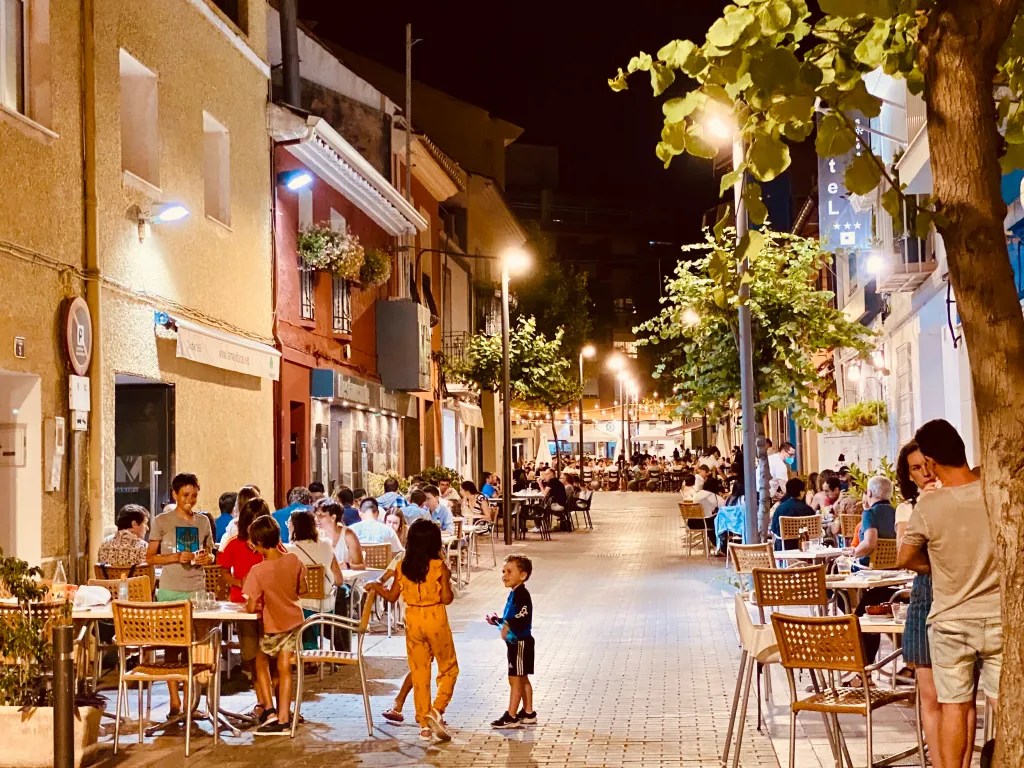
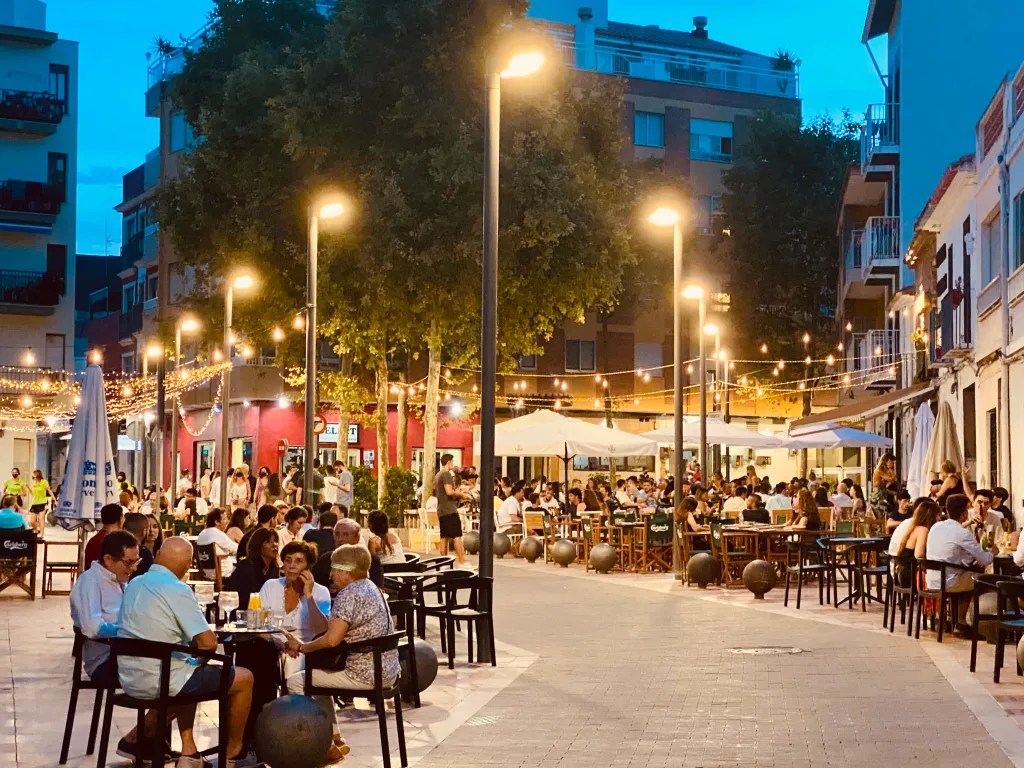
The act is social before it is anything else — neighbors pause to catch up, families walk together, friends drift in and out of conversation. What it does to the street is transformative. A pedestrian lane becomes a dining room. Because the whole neighborhood is out at once, restaurants and bars push their tables and chairs into the pavement, filling the center of the street in terraza after terraza.
The street that was empty at four is impassable at nine — not with cars but with people, and with the infrastructure of pleasure that follows them.
The rambla provides the most legible version of this. A wide pedestrian boulevard — the most famous being Barcelona’s La Rambla, though the form appears in towns of all sizes across Spain — offers a shared lane down its center that is neither pavement nor road. It belongs to whoever is using it: the couple taking an evening stroll, the family with a stroller, the older man walking his habitual route, the tourists who have been told to go there. The bar tables encroach from both sides. A rambla in full evening use is the paseo and the terraza simultaneously, the walking and the eating sharing the same surface.


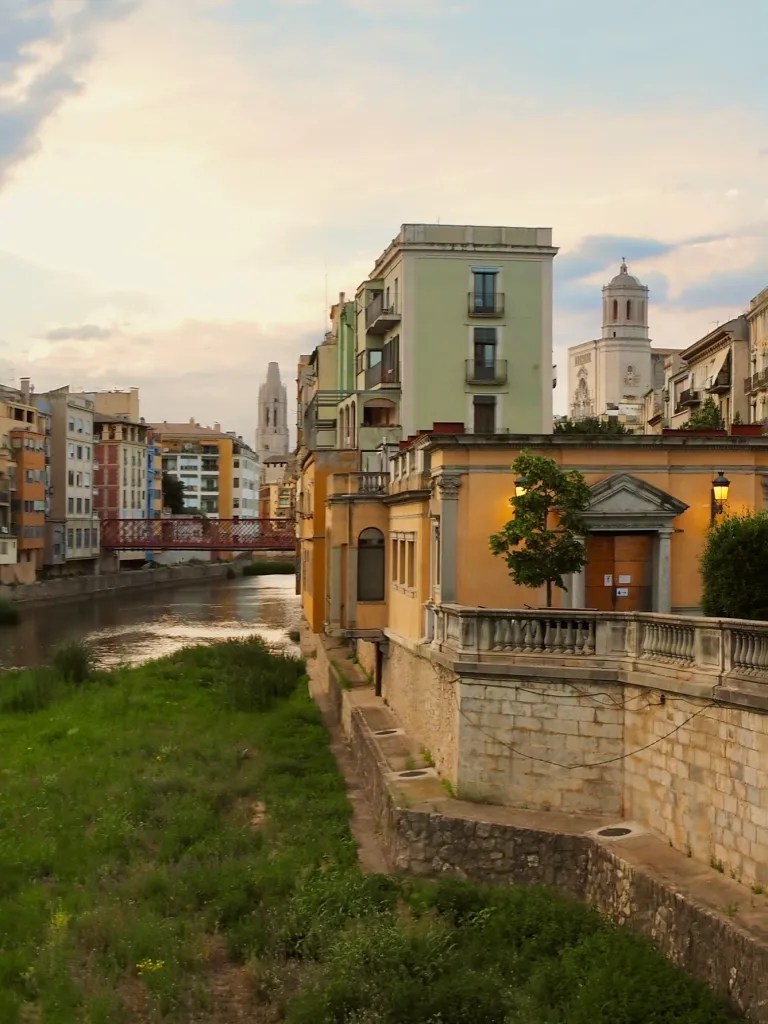
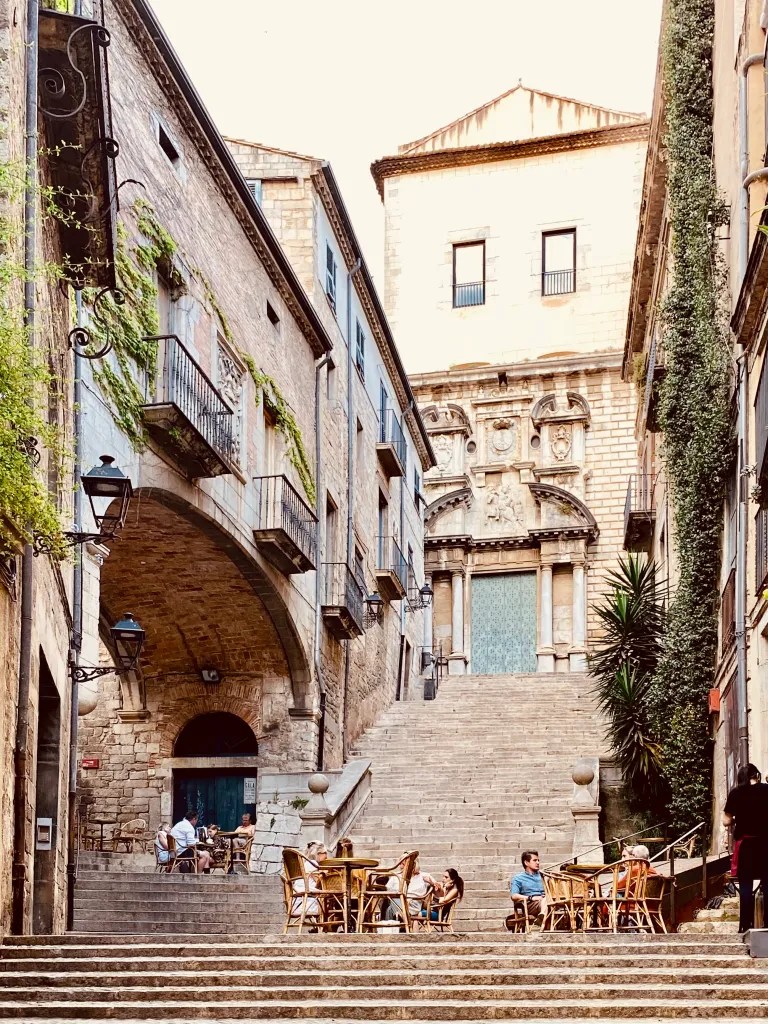
We walked along Rambla de la Llibertat in Girona and through the covered passageways that thread the old city — arcaded walks that shade the street in a different way, intimate and medieval, the bar tables tucked under the arches.
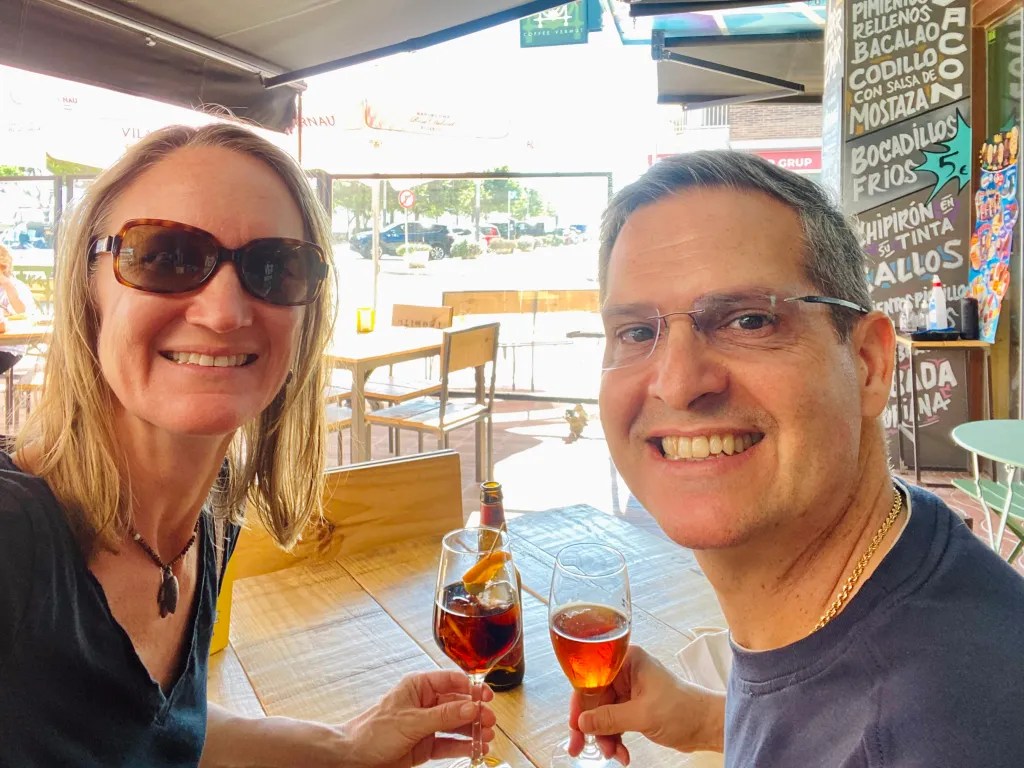
One evening we stopped at Zanpanzar for a vermut rojo and pintxos — the Basque bar snacks, small bread-topped bites lining the self-serve counter, a toothpick in each, collected and counted at the end to determine the bill. We had first encountered pintxos along the warmly lit streets of Valencia, in a Basque restaurant we stopped at after a long day on foot.
Aaron and I had discovered our fondness for vermouth — sweet, not dry — during La Hora de Vermut on a day trip along the beach of Palamós, in Catalonia. The timing of it, late morning into early afternoon, the aperitif hour before the long lunch, was itself a social ritual with its own designated window.


The tasca is where the dissolution of categories becomes most complete. Traditional tascas are notoriously small — a bar counter, a few stools, standing room only. When a place fills, and it always fills, patrons drift outward onto the pavement still holding their glass and their plate, occupying the street by extension. The interior and the exterior become the same space. In the evening, it is nearly impossible to tell where one bar ends and the street begins, or to identify precisely when you stopped walking and started eating, or when you left one place for the next.
This rhythm is known as the tapeo: the tapas crawl, the movement from bar to bar that defines how Spaniards spend an evening out. A tapeo is not dinner. It is the alternative to dinner — one drink, one or two bites, then movement. The next bar, the next street, the conversation continuing without sitting down. The model presupposes the paseo: you are already walking, already out, already in the street. The stopping is incidental to the moving. The eating is incidental to the being out together.
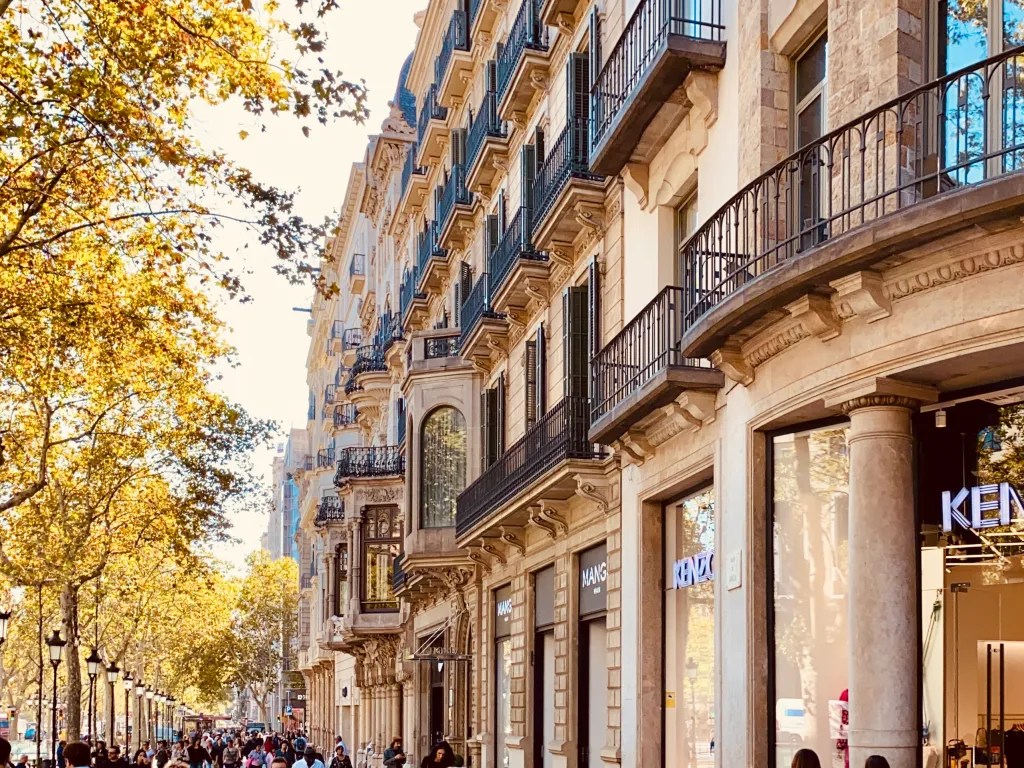

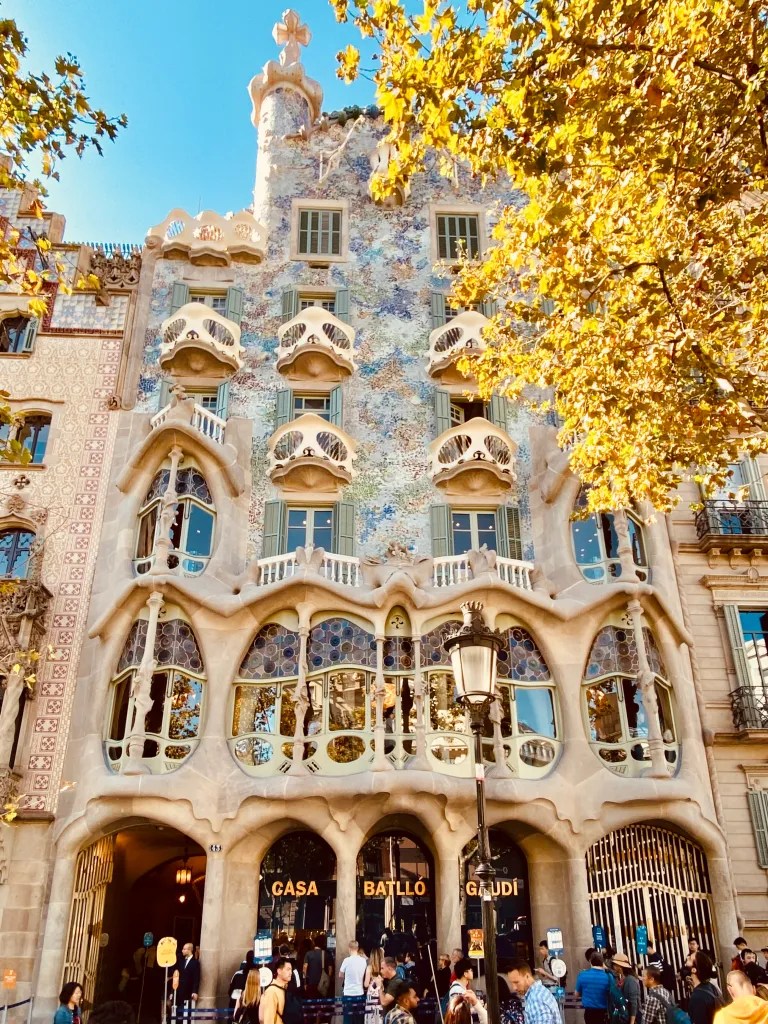
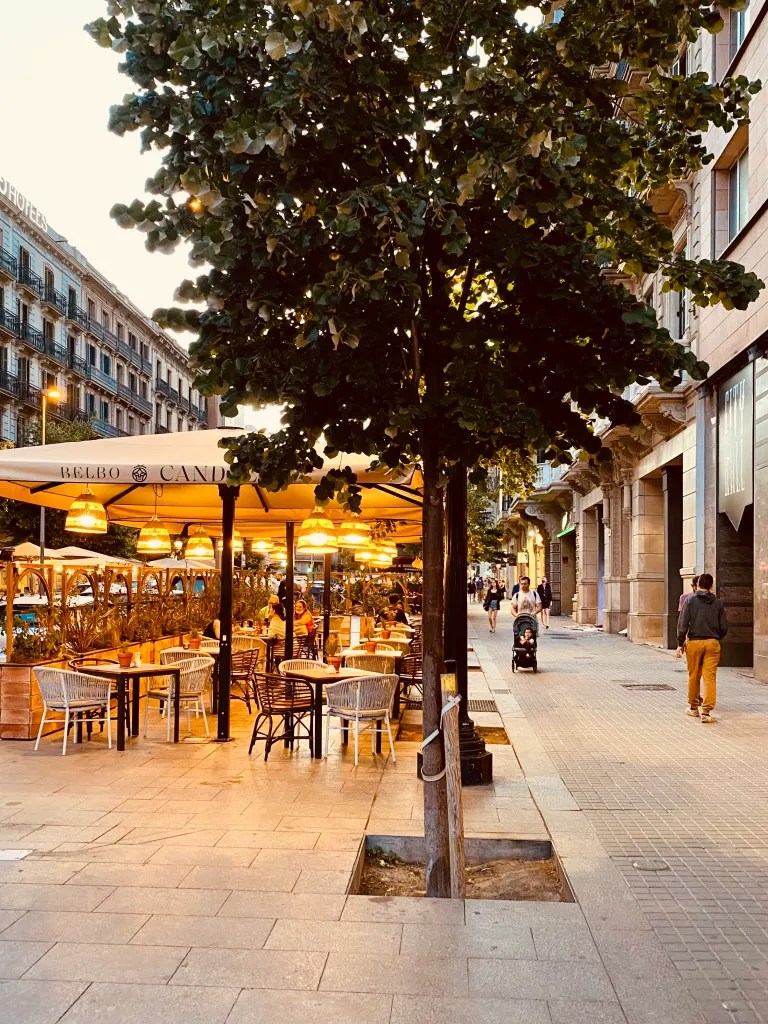
In Barcelona, we walked along Passeig de Gràcia — the wide, Modernista-lined boulevard that is as much a civic promenade as a shopping street — and along La Rambla. Some of the tapas restaurants along the more tourist-heavy stretches can be mediocre and overpriced (as they often are anywhere foot traffic guarantees enough turnover to make standards optional — though exceptions exist among those who take genuine pride in their craft).
We sat inside at most places, avoiding the cigarette smoke that tends to overtake outdoor tables — the one bewildering contradiction in an otherwise health-conscious culture. Seeking out more local spots, we found excellent bar fare at El Chigre taberna and vermuteria in El Born, then exquisite, refined dishes at Suculent in El Raval — the kind of cooking that would be fine-dining in another context and here simply occupies a small room on a quiet street.


In Girona’s winding streets, we sat in a small restaurant and selected our seafood from the display case: fresh scallops, a small seafood paella, and a fideuà — the Catalan pasta equivalent of paella, short noodles absorbing the same saffron-and-seafood depth, the technique identical but the texture altogether different. The meal was unhurried. The evening was long. This is the other quality of the paseo — it is not rushed. Time in Spanish street life is allocated generously and spent without apology.



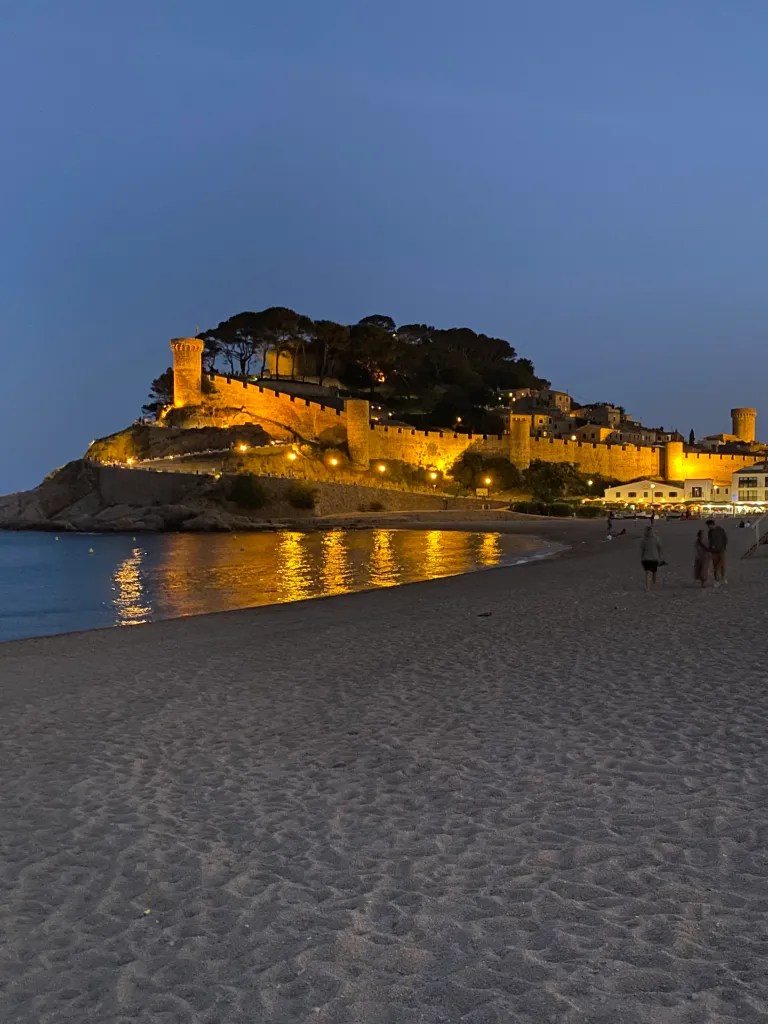
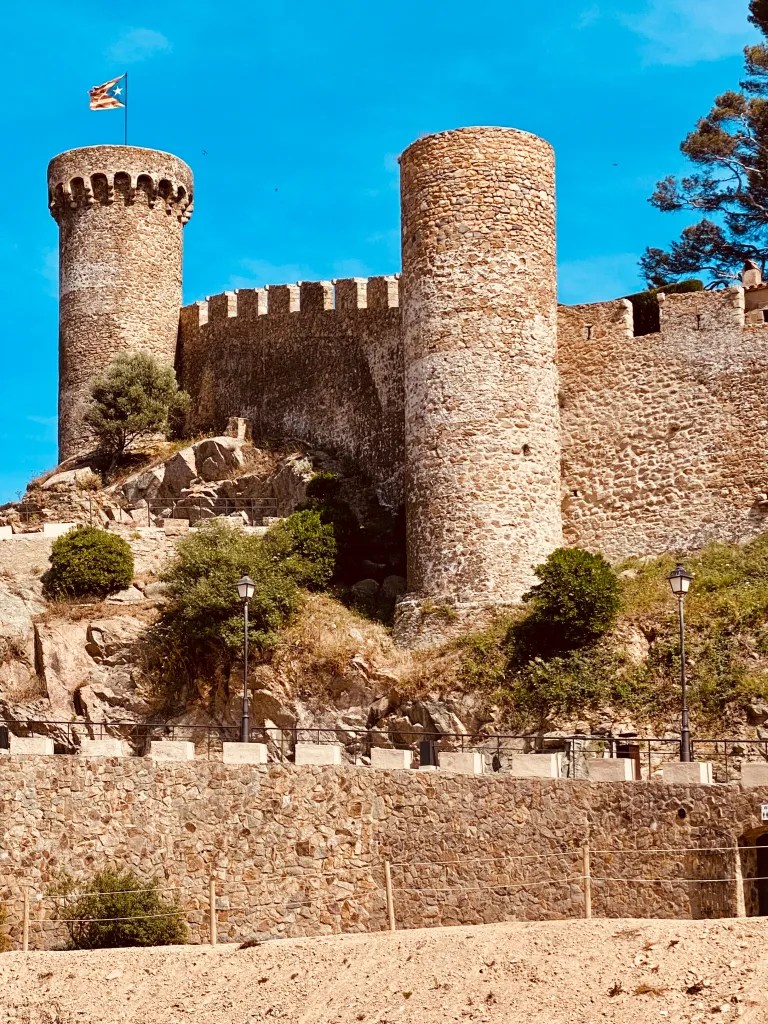
In Tossa de Mar, Passeig del Mar wraps the beach with restaurants along its narrow streets, but what we returned to each evening was the walk along the medieval wall to the castle and the lighthouse. After dinner, at eleven at night, people of all ages were still out — children, elderly couples, everyone moving along the lit promenade, the lights of the castle reflecting off the bay below.
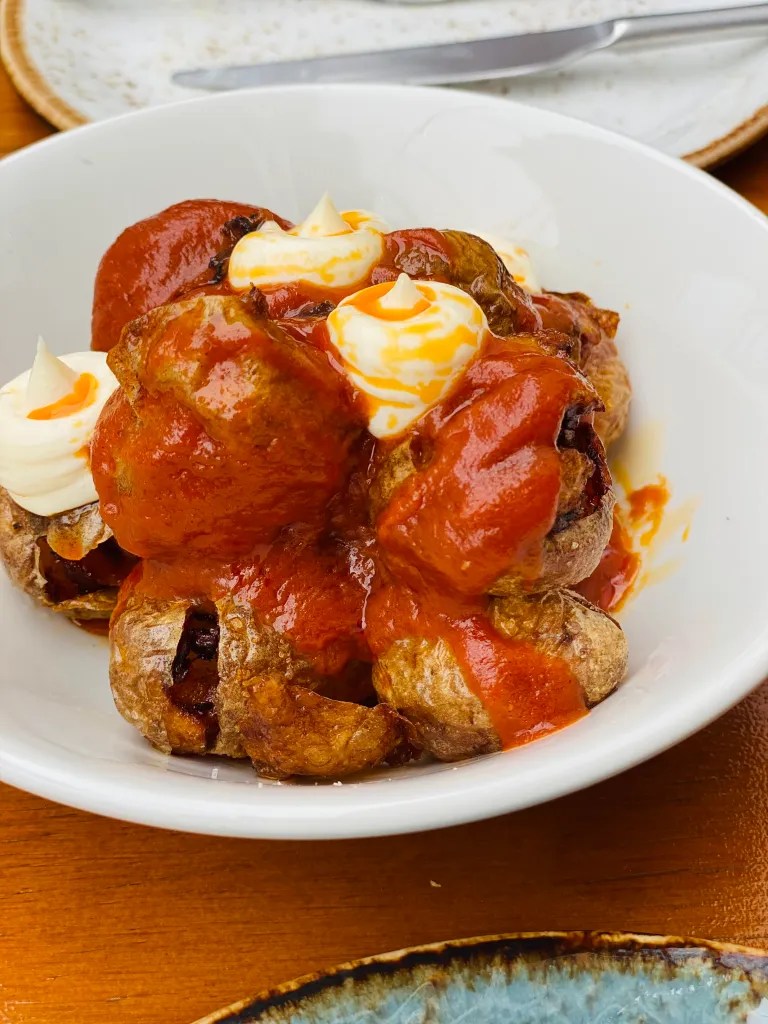
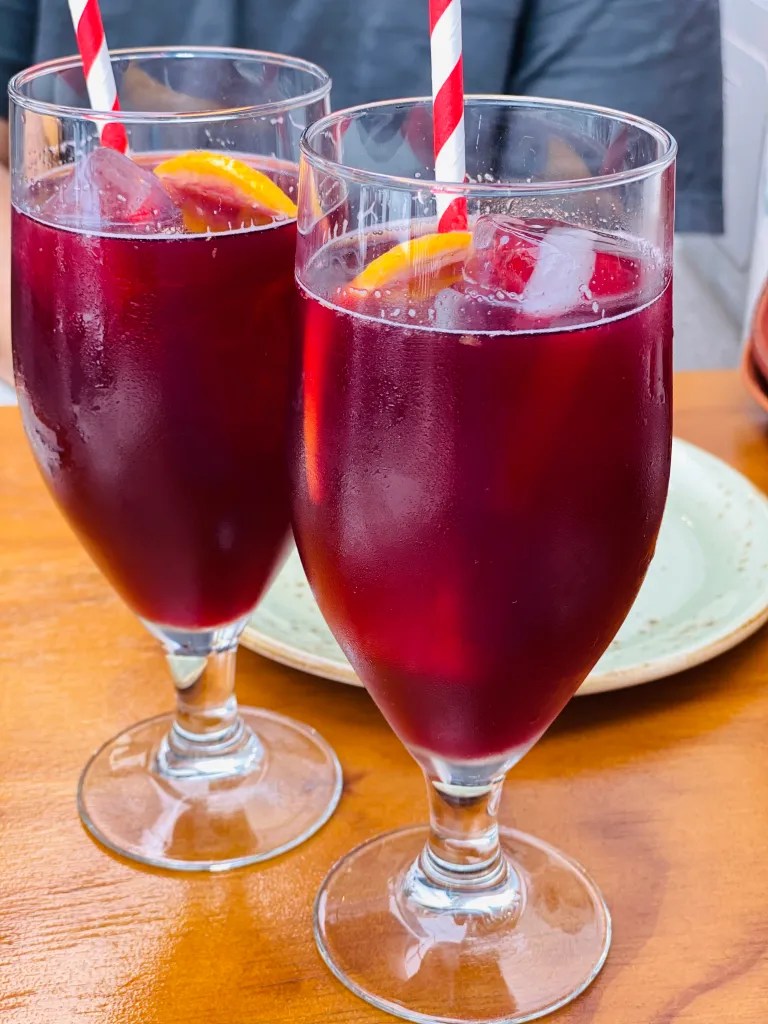
By day we drank liter pitchers of sangria at a table overlooking the water. There was a smaller spot beneath the castle that served sangria with ceviche and patatas bravas on a small patio along the lane — fewer people meant fewer smokers, and the fresh air was its own amenity.
Our most complete experience of the street-as-living-room was in Benicàssim, where the streets around Carrer Sant Tomàs shut down entirely each evening from Thursday to Sunday as tables filled the road.
We arrived back from a day in Valencia on Thursday night, unaware — and found ourselves stopped at the barrier with no way through. We flagged down a nearby officer, explained our situation; they escorted us around the perimeter, through the church plaza, down our little blocked street while other diners moved their chairs to let our car through. We made our apologies, found our parking, and made sure to return well before seven on every subsequent evening to join the street from the right side of the barrier.
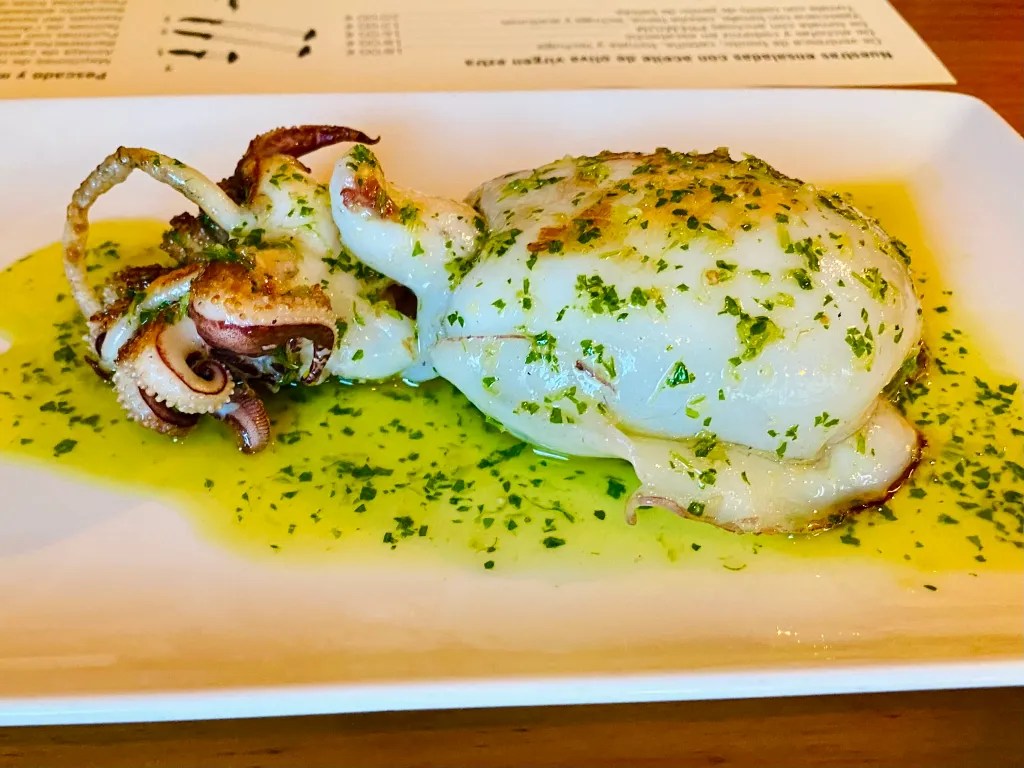
Among the best things we ate there: plump, juicy pulpo a la gallega (octopus with potatoes), fresh gazpacho, buñuelos de bacalao (cod fritters), calamares rellenos (stuffed squid), pan con tomate, tortilla de patatas, crema catalana, and patatas bravas, which Spanish restaurants here in Sacramento have yet to properly replicate.

The Spanish evening is not scheduled around a single meal in a fixed location. It is structured around movement — the paseo as both physical practice and social logic, the rambla as the stage it prefers, the tasca as the punctuation rather than the destination. What results is an outdoor life so continuous and so shared that the street stops being infrastructure and becomes, for a few hours each evening, the most comfortable room in the city.
There is a reason Spaniards tend to be more fit and healthy than their love of food and drink might suggest. The food itself is simple — quality ingredients prepared without excess. But the lifestyle is the larger explanation.
Movement is not something scheduled around the day; it is woven into it. The paseo is not exercise. The tapeo is not calorie management. They are social rituals that happen to require being on your feet, outside, covering ground, talking to people. Connection and movement are not added to the evening — they are the evening. The health follows from the life, not the other way around.
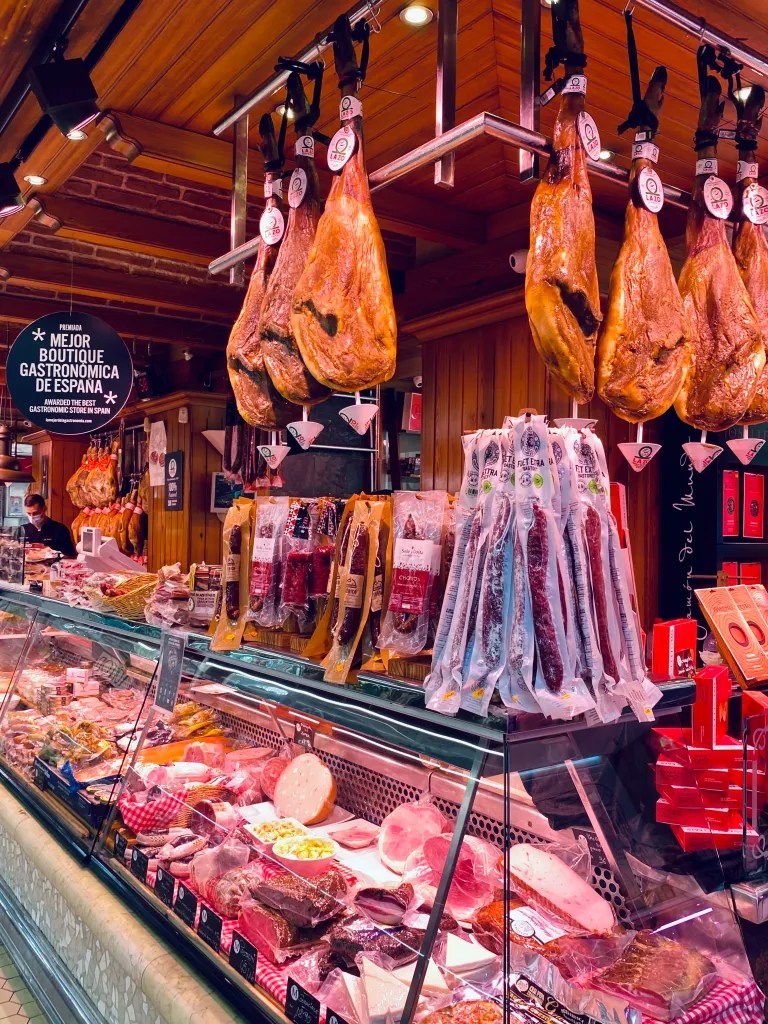


Some of this is beginning to find its way to American cities. In Midtown Sacramento, a handful of restaurants have started pushing tables toward the pavement, and the instinct is right. The farmer’s market — one of the best in the country, driven by a farm-to-fork movement that has genuine roots here — shows the same impulse: people gathering around food, outside, in a shared space.
But the infrastructure for it is largely absent. Connected pedestrian zones that feel designed rather than incidental. Intentional tree canopy that creates enclosure and shade rather than sporadic plantings that read as an afterthought. Sacramento is known as the City of Trees, yet the canopy rarely translates into the kind of sheltered, continuous experience that makes a street feel like somewhere to linger. Most American cities share the same gap.
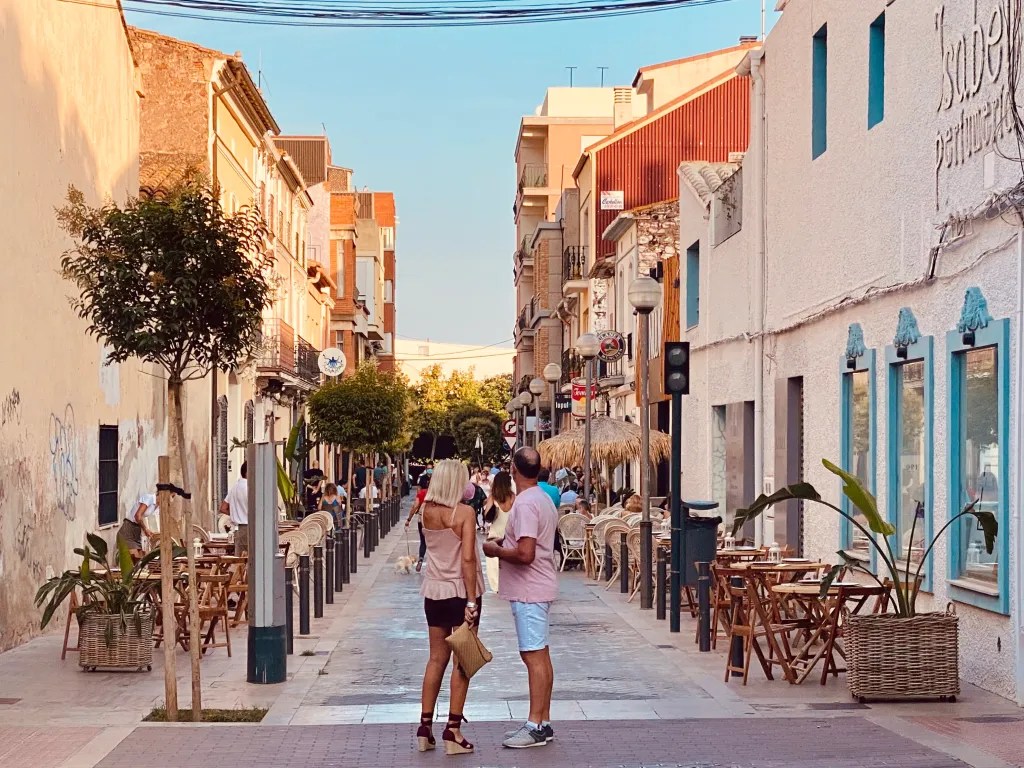
European streets are built for people, not just the flow of traffic — which moves at a slower pace to accommodate them. Buildings are mixed-use by design: the ground floor a café or shop, the floors above residential or office, everything integrated so that living, working, eating, and gathering happen within the same block, often the same building. Architecture is treated as art. Landscape softens the hardscape and creates shade. Lighting and materials — the warm glow of a stone façade, the texture of cut pavers underfoot — create comfort and invite lingering.
The cobblestone and stone pavers of a Spanish rambla have a warmth and a weight that asphalt or concrete simply doesn’t — and the care that goes into laying them is often artful in itself. They signal that the street was designed to be inhabited. Not just traversed.
What Spain understands, and what much of Europe has built into its cities over centuries, is that the quality of public space is not incidental to community life. It is community life. A landscaped pedestrian boulevard doesn’t just make walking more pleasant; it creates the conditions under which people choose to be outside together — which is the precondition for everything else the paseo makes possible.
In Europe, walking is not what you do when you can’t drive. It is how a city knows itself.
Explore the Spain Atlas → • Read Valencia Doesn’t Announce Itself → • Read A Sleepless Night in Girona → • Join The Inspired Lens →