
In Argentina, an asado is not a barbecue. It is a social event that happens to involve fire.
The name comes from the Spanish verb asar — to grill. It refers simultaneously to the method, the meat, and the gathering. An asado can last an entire afternoon. The fire is started hours before anyone eats. The asador — the person managing the grill — is not a host performing a task but a practitioner of something that has its own requirements, its own sequence, its own pace. To rush an asado is to misunderstand what it is.


There are six elements. Understanding them is the difference between experiencing an asado and merely attending one.
I. Fuego — The Fire
The asado begins with the fire, and the fire begins long before the meat arrives. A proper asado fire is built from wood or charcoal (carbón) — never lighter fluid, which would compromise the flavor of everything that follows. The wood burns down to embers; the embers produce steady, even heat. This process takes an hour or more. The asador tends it with patience, adjusting the height of the grill grate (parrilla) over the embers rather than the heat of the fire itself.
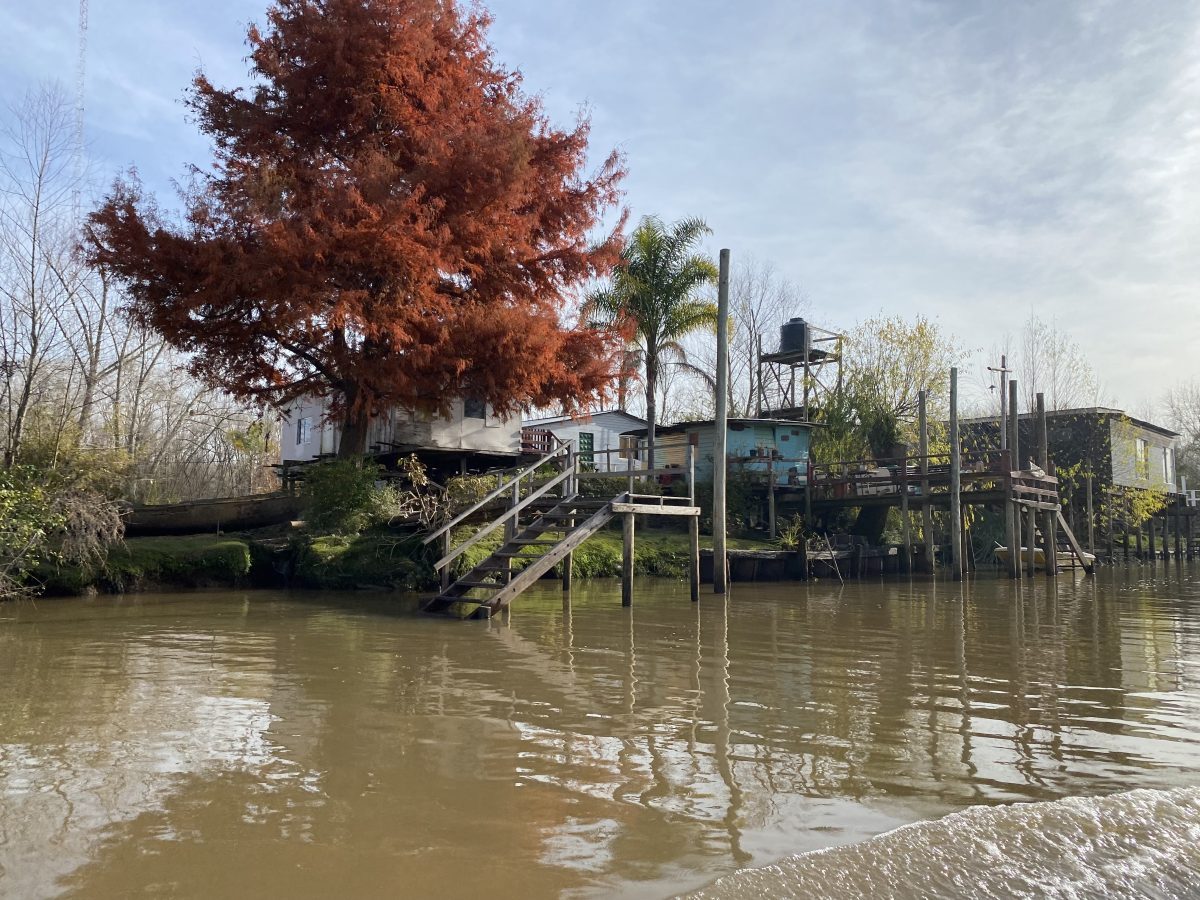
At Frederic’s property in the Tigre Delta, the fire was already well established when we arrived. The smoke had been moving through the property for the better part of the afternoon before we were called back from our walk by the smell. That timing — the slow preparation invisible to the guests — is part of the hospitality.
II. Parrilla — The Grill
The parrilla [pa-ree’-sha or -zha in Argentine Spanish] is the grill itself — a steel grate set over the fire at a height the asador controls, usually on a V-shaped rack that can be raised or lowered. The meat cooks slowly, on one side at a time, with minimal intervention. An Argentine parrilla operates at lower temperatures than American barbecue; the goal is a gentle, even cook rather than char. The asador reads the meat, not the clock.
The parrilla is also the word for a steakhouse restaurant, and parrillar is the verb for grilling over it. When porteños say they are going to a parrilla, they mean the restaurant. When they say someone is hosting an asado, they mean the event.
III. Carne — The Meat
Argentine beef is the foundation of the asado, and it earns its reputation. The cattle roam freely on the Pampas — the vast, fertile plains that stretch across the country — raised on natural, unfertilized pastures without confinement. The use of artificial growth hormones and antibiotics is strictly prohibited. The result is a flavor and tenderness that grain-fed, hormone-supplemented beef cannot replicate, and that makes the simplicity of the preparation possible: coarse salt is all the seasoning needed because the animal itself is the flavor.
The cuts favored for asado differ significantly from American barbecue: asado de tira (short ribs, the namesake cut), vacío (flank), entraña (skirt steak), matambre (the thin cut rolled from between the hide and the ribs), and mollejas (sweetbreads). Pork is present — chorizo, morcilla (blood sausage), chinchulines (small intestine) — particularly in the starters. Chicken appears less frequently and is generally considered a lesser offering at a serious asado.
IV. Guarniciones — The Accompaniments
An asado is not only meat, though the meat is the point. The accompaniments arrive in sequence, serving both as starters while the main cuts cook and as sides alongside them.
Choripán comes first: chorizo grilled and served in a soft baguette-style roll, dressed with chimichurri — the Argentine sauce of parsley, oregano, garlic, olive oil, and red wine vinegar. Then morcilla, the blood sausage, sweet or savory depending on the region. Provoleta — a round of provolone grilled directly on the grate until charred on the outside and molten within — is a standard starter. Chinchulines divide the table.
Sides are simple: salads of tomato and onion, papas fritas, sometimes roasted peppers. The food is not complicated. The quality of the ingredients makes complication unnecessary.


V. Vino — The Wine
Argentina produces some of the finest wine in the world, and at an asado, it flows without ceremony. Malbec is the national grape — full-bodied, deeply colored, with the dark fruit and smooth tannins that stand up to the richness of the meat. The Mendoza region, at the foot of the Andes, produces the Malbec that has made Argentina’s reputation internationally. Torrontés, the aromatic white, pairs with the lighter starters. Fernet con coca — Fernet-Branca mixed with Coca-Cola over ice — has its own ritual, particularly in Córdoba province, where it is less a cocktail than a cultural institution.
At Frederic and Valeria’s table, Malbec circulated alongside the meal, and Valeria made the fernet con coca after dinner, explaining its Córdoban origins to the table with the authority of someone who grew up with it. It is bitter and complex and takes a moment to understand. Then it doesn’t.
VI. Gente — The People
The sixth element is the one that makes the asado what it is. Without the people, it is just meat over fire.
An asado is a gathering — of family, friends, neighbors, colleagues, strangers who have been invited in. It is designed to last for hours, because the conversation is the point as much as the food. Argentines are generous hosts and easy company. The table at Frederic and Valeria’s extended from starters through the main meal through maté through fernet con coca through guitar music, well into the afternoon, until the light in the delta began to go. No one hurried the ending.
Maté was Valeria’s gift to the table before the meal — a thermos of hot water with steeped yerba tea, each of us pouring a cup. Maxi produced his personal gourd — a cow-leather-wrapped calabash with its own bombilla — and explained the curing process: three to four days of preparation with yerba before first use, the gourd absorbing the flavor until it becomes part of the drink. A well-cured gourd improves with every use; you don’t replace it, you continue it. He explained why we had been seeing porteños everywhere in Buenos Aires carrying thermoses and maté holders — on the bus, in the parks, walking the streets. The thermos is as much a daily essential as a wallet. The ritual belongs to the person and to the day, not just to the gathering.
La gente — the people — are what the asado is for. Everything else is preparation.
The Asado elements connect to the Argentina Atlas and the Tigre Delta story. Read the full account of Buenos Aires: The city behind this story →
Asado in the Tigre Delta
Before we left for Argentina, I had said it out loud: I wish I knew someone so we could experience a real asado. The universe, apparently, was listening. A few days into the trip, on the bus to the Boca Juniors game — a cultural immersion that deserves its own telling — Maxi leaned in…

Buenos Aires: La Vida Es Buena
Buenos Aires doesn’t ease you in. It absorbs you, neighborhood by neighborhood, until one morning you realize you’ve stopped looking at a map. We arrived in late June with our son Cole, his Porteño coach Maxi, and a handful of fellow players from his club — the guys here to train for a week with…