
Tarragona + Costa Daurada
Roman Catalonia and the golden coast
Catalonia’s southeastern province is Tarragona with its provincial capital of the same name set along the Costa Daurada of the Mediterranean Sea bordered by the Valencian Community to the south.
The City of Tarragona is Roman Spain’s most intact urban ensemble. Founded as Tarraco in 218 BC as the Roman military base for the conquest of the Iberian Peninsula, it became the capital of Hispania Citerior — one of the most significant cities in the Roman world outside Italy. The UNESCO-listed archaeological ensemble includes an amphitheater overlooking the Mediterranean, a Roman circus, the remains of the forum, and the Passeig Arqueològic along the Roman and medieval walls.
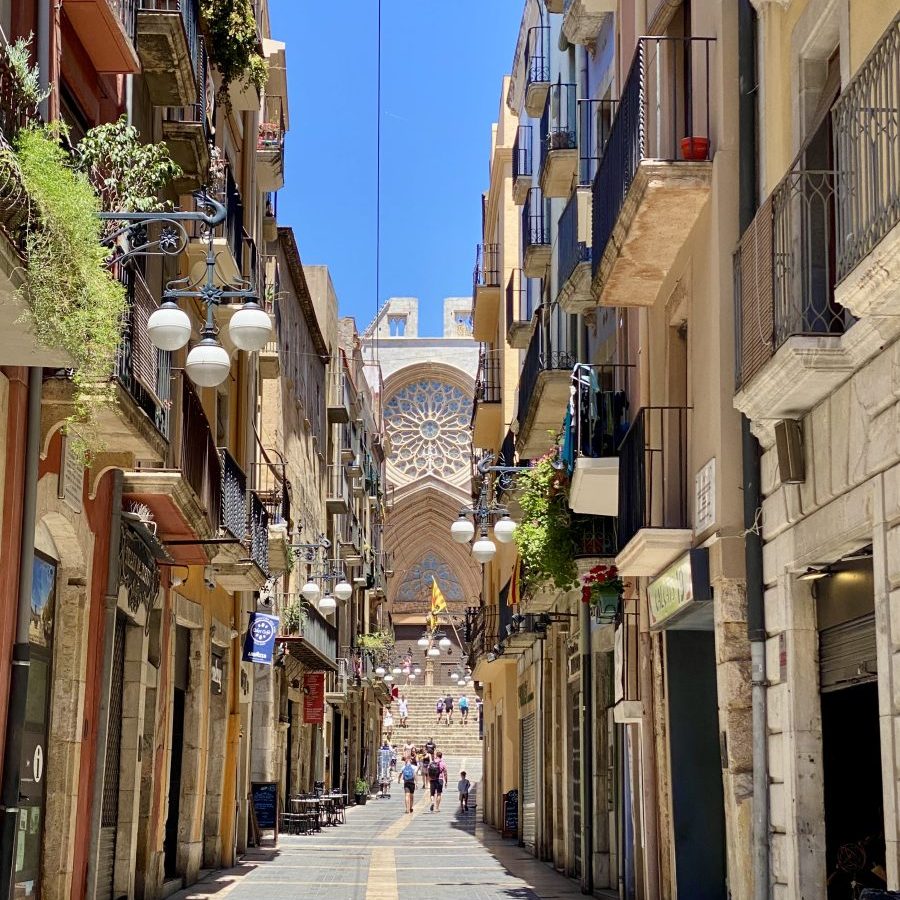
The city’s historic center is walkable. The Roman archaeological ensemble — the amphitheater, the circus, the forum, and the walls — is distributed across the upper and lower city. The Passeig Arqueològic follows the Roman and medieval walls above the lower city.
I passed through Tarragona in 2021, en route from Tossa de Mar to Benicàssim. Our stopover was long enough to note the Roman amphitheater’s position above the sea, the medieval city layered above it, and the particular quality of a city that wears its Roman past with the same matter-of-fact continuity as Vienne in France.
Basics of the Province of Tarragona
Know Before You Go
Catalan + Spanish
official language
Euro €
currency
The City of Tarragona
provincial capital
Parte Alta
historic center
Administrative
Provincial Capital of Tarragona, Catalonia
Weather
Warm Mediterranean climate, averaging 50°–74°F year-round
When to Go
- April–June and September–October ideal
- July–August busy and warm
- November–February quietest and most affordable
Getting around
The historic center is compact and fully walkable. A car is useful for exploring the Costa Brava coastline and inland towns.
Airports
- Barcelona–El Prat (BCN) for international
- Reus Airport REU for local travel
Rail
- Tarragona Station (most central rail in Tarragona city)
- Camp de Tarragona Station (rail to Madrid north of the city)
Photo Gallery


Rail

Courtesy: Wikimedia Commons
- Train service runs through the province along the Mediterranean with regional express trains from Tarragona Station to Barcelona or Valencia and high-speed AVE (Spain) trains from Camp de Tarragona.
- TrainLine rail app is a good resource for making reservations
- Rail Europe is also a great source for making necessary train reservations—more travel information can be found in my post on an earlier trip: Northwestern Europe
- Our Eurail passes covered our train travel between cities and villages within our selected countries on the continent
- Maps are stored on our phones for quick reference. This regional rail map extends from central Barcelona south into Tarragona province at Sant Vicenç de Calders in Coma-ruga:
Signature Moments
- The Roman amphitheater at Tarragona — its curved tiers directly above the Mediterranean, the sea visible between the ancient stone arches, the relationship between Roman civic life and its coastal geography still legible
Continue the Journey
Tarragona is most naturally experienced as part of a Catalonia sequence — the Roman south in counterpoint to the Gothic north.
Return to Catalonia → or explore Barcelona → and Girona →
Join The Inspired Lens → for early access to the Reading Catalonia guide.
Catalonia Explored

The Spanish Street as Living Room
In Spain, the street is not a place you pass through on the way to somewhere else. It is the destination. What makes this work is not any single space or habit but the way three distinct things — the paseo, the rambla, and the tasca — dissolve into each other by evening.

Barcelona: Arriving Into Catalonia’s Crisis
Somewhere between Valencia and Barcelona, my phone rang a few times. I let it go. But it wasn’t the routine coordination I had assumed. We had spent ten days in Valencia in 2019 — Cole playing in an international tournament, Caden at the age threshold where he assisted their coach rather than played (other teams…