
Buenos Aires
The Paris of South America — and Something Else Entirely
Buenos Aires doesn’t ease you in. It absorbs you, neighborhood by neighborhood, until one morning you realize you’ve stopped looking at a map.
The city’s nickname — the Paris of South America — was earned by its 19th-century architecture: the wide diagonal boulevards, the Haussmann-inflected apartment facades, the grand civic buildings of a nation that believed itself destined for European significance. That ambition is still visible in the stone. But Buenos Aires is unmistakably Argentine — shaped by Italian immigration as much as Spanish, by gaucho culture as much as European aspiration, by a relationship to time and pleasure that has no real equivalent elsewhere.
It is a city that operates on its own schedule. Dinner begins at ten. The streets fill rather than empty as the night deepens. The asado — the fire, the gathering, the afternoon given over entirely to eating and conversation — is not a meal but a social institution. Understanding Buenos Aires means accepting its pace before trying to navigate it.
How Buenos Aires Is Organized
Buenos Aires is divided into 48 barrios — neighborhoods that radiate from the historic center outward (grouped into 15 comunas), each with a distinct character shaped by immigration waves, economic history, and the particular way porteños have claimed their streets.
The city sits on the western bank of the Río de la Plata — technically a river, practically an inland sea, its opposite bank invisible on most days. The historic center (Microcentro and San Telmo) anchors the east; the wide Avenida 9 de Julio — one of the widest boulevards in the world, with the Obelisco at its center — bisects the city north to south. The residential neighborhoods expand westward, the character shifting from European grandeur (Recoleta) to bohemian density (Palermo) to working-class vitality (Villa Crespo, Caballito) as the distance from the river increases.

Basics of Buenos Aires
Know Before You Go
Spanish
official language
Argentine Peso $
currency
48 | 15
barrios | comunas
The Metro + RER
transport
When to Go
- April–June and September–November — temperate, manageable, the city at its most inhabitable.
- July is winter (cool, manageable).
- January–February is summer (hot, many porteños leave for the coast).
- The city operates year-round.
Getting around
The Subte (Metro) is fast within the central barrios — 6 lines covering the historic center and major neighborhoods. Taxis and remises (hired cars) are practical for longer distances. Buenos Aires is walkable barrio by barrio — the city rewards pedestrian exploration.
Airports
- Aeropuerto Internacional Ministro Pistarini (Ezeiza / EZE) — international flights, 35km from city center.
- Aeroparque Jorge Newbery (AEP) — domestic and regional, adjacent to the city along the river.
Safety
Buenos Aires is generally safe for the attentive traveler. Standard urban precautions apply — be aware in tourist areas, on public transit, and around ATMs. The city’s reputation for petty theft is manageable with basic awareness.
Language
Spanish; Rioplatense Spanish is the regional dialect — characterized by voseo (use of vos instead of tú) and Italian-influenced intonation
Currency
Argentine Peso (ARS) — exchange rate fluctuates significantly; USD cash often preferred; confirm current exchange options before travel
Time Zone
ART (UTC-3) — Argentina does not observe daylight saving time
The Barrios — Key Neighborhoods
San Telmo The oldest barrio in Buenos Aires — cobblestone streets, colonial-era buildings, antique markets, and the particular energy of a neighborhood that has been alternatively neglected and rediscovered enough times to produce genuine character. The Sunday Feria de San Telmo fills the street with vendors, performers, and the smell of empanadas from late morning until dark.
La Boca The working-class port neighborhood where Italian immigrants arrived and painted their corrugated metal houses in whatever colors the ships’ paint supplies offered. The result — Caminito’s improbable brightness against gray river sky — has become one of the most photographed streets in South America. La Boca is also the home of Boca Juniors and La Bombonera, the stadium that defines the neighborhood’s identity as completely as any building defines any place in the city.
Recoleta The most overtly European barrio — French Belle Époque apartment buildings, wide tree-lined avenues, the Cementerio de la Recoleta where Eva Perón and generations of Argentine elite are buried in mausolea that read as miniature architecture. The cemetery alone justifies the visit — it is one of the most spatially unusual civic spaces in South America.
Palermo The largest barrio, subdivided informally into Palermo Soho (design boutiques, restaurants, the weekend antique market of Plaza Serrano), Palermo Hollywood (production companies, media, bars), and Palermo Chico (embassies, parks, the MALBA contemporary art museum). The Palermo parks — Bosques de Palermo, the Rosedal — are where Buenos Aires breathes on weekends.
Belgrano A residential neighborhood of particular density and genuine daily life — good for understanding how porteños actually live outside the tourist circuit. The Chinatown strip along Arribeños is South America’s oldest Chinese commercial district.

Courtesy: Cuidad Imaginaria
San Nicolás / Microcentro The historic commercial and civic center — Plaza de Mayo, the Casa Rosada (the pink government house facing the plaza), the Catedral Metropolitana, the Banco de la Nación. The May Revolution of 1810 that began Argentina’s independence began here, and the plaza has been the site of every significant political gathering since.
Puerto Madero The converted waterfront docklands — Buenos Aires’s attempt at a contemporary district, with the Santiago Calatrava-designed Puente de la Mujer bridge as its architectural signature. Worth a walk along the Reserva Ecológica beside it, where the city’s edge meets the river directly.
Tigre Delta Not a barrio but an essential extension of Buenos Aires. 30 kilometers north of the city center, the Tigre Delta is a labyrinth of islands formed by the Paraná Delta where the river meets the estuary. Accessible by boat from the Tigre port. The experience of Buenos Aires is not complete without a day on the delta — where the city recedes and the particular rhythm of Argentine outdoor life, anchored by the asado, asserts itself.
The Table
Buenos Aires is one of the great food cities of the Southern Hemisphere — not in the way of Paris or Tokyo, where cuisine is codified and rarefied, but in the way of a city that takes the daily act of eating with complete seriousness.
The parrilla — the Argentine steakhouse — is the primary institution: beef from the Pampas, cooked over wood fire on a flat iron grill, served in cuts unfamiliar to most visitors (the bife de chorizo, the vacío, the entraña) with chimichurri and bread. The parrilla ranges from the neighborhood tenedor libre (all-you-can-eat, informal, extraordinary value) to the destination restaurant where a single cut receives the attention of a fine-dining kitchen.
The asado is different from the parrilla — it is the private version, hosted at home or in a country house, governed by the asador and the fire rather than a menu. The social dimension is inseparable from the food. See: Asado in the Tigre Delta.
Beyond beef: empanadas (baked or fried, filled with beef, chicken, cheese, or corn); facturas (the Argentine pastry tradition, largely Austrian-influenced, consumed at confiterías with coffee); dulce de leche (caramelized milk spread on everything); medialunas (the Argentine croissant, softer and sweeter than the French version).
The café culture is its own institution — the confitería as a place to occupy for hours, over a coffee and a glass of soda water, reading or talking or watching the street. The Café Tortoni on Avenida de Mayo, open since 1858, is the most famous example — though any neighborhood café will do.
Football as Culture
Football in Argentina is not a sport in the way most countries experience sport. It is the primary lens through which Argentine identity is expressed, contested, and celebrated — the vehicle through which a city of immigrants became a single people.
The Buenos Aires football geography is organized around the two great clubs: Boca Juniors (La Boca, working class, the tunnel entrance to La Bombonera) and River Plate (Belgrano/Núñez, the Monumental stadium, the prestige of the upper city). The Superclásico between them is considered the most intense club derby in the world.
La Bombonera — Boca Juniors’ stadium, opened in 1940 — is worth visiting regardless of match attendance. The stadium is architecturally distinctive: three conventional stands and one vertical concrete face, the design a result of the tight La Boca streets that constrained its footprint. On match days, the crowd’s movement in the vertical stand creates a physical vibration — the stadium, as Boca’s players have noted, seems to bounce.
The experience of attending a match requires planning, a trusted contact, and genuine attention to the social protocols around the stadium. Cole’s coach Maxi provided the cultural navigation that made the Boca Juniors match described in the Buenos Aires essay possible — this is exactly the kind of in-destination expertise that a designed journey should include.
Signature Moments
- Walking into La Boca and understanding that the painted facades of Caminito are not a museum exhibit but an ongoing act of neighborhood identity — the color choices as deliberate now as when Italian dockers first made them from ship paint
- Sitting at a corner table in a Palermo confitería at eleven at night, the room full, the coffee strong, the conversation at every table running at a pace that shows no sign of ending — understanding that the city has not even begun
- Crossing from Buenos Aires to Colonia del Sacramento by ferry — the city receding across the Río de la Plata, the water shifting color, the scale of the estuary finally legible from the water
- The asado in the Tigre Delta — arriving by boat, the fire already started, the afternoon already given over to something that has no schedule and no end time
- Attending the Boca Juniors match at La Bombonera — the stadium’s vertical concrete face, the crowd’s movement creating a physical vibration, the particular intensity of a football culture that has been building since Italian immigrants first claimed this river neighborhood
Buenos Aires Through The Lens

Buenos Aires: La Vida Es Buena
Buenos Aires doesn’t ease you in. It absorbs you, neighborhood by neighborhood, until one morning you realize you’ve stopped looking at a map. We arrived in late June with our son Cole, his Porteño coach Maxi, and a handful of fellow players from his club — the guys here to train for a week with…
Keep reading
The Asado: What the Fire Requires
In Argentina, an asado is not a barbecue. It is a social event that happens to involve fire. The name comes from the Spanish verb asar — to grill. It refers simultaneously to the method, the meat, and the gathering. An asado can last an entire afternoon. The fire is started hours before anyone eats. The asador — the…
Keep reading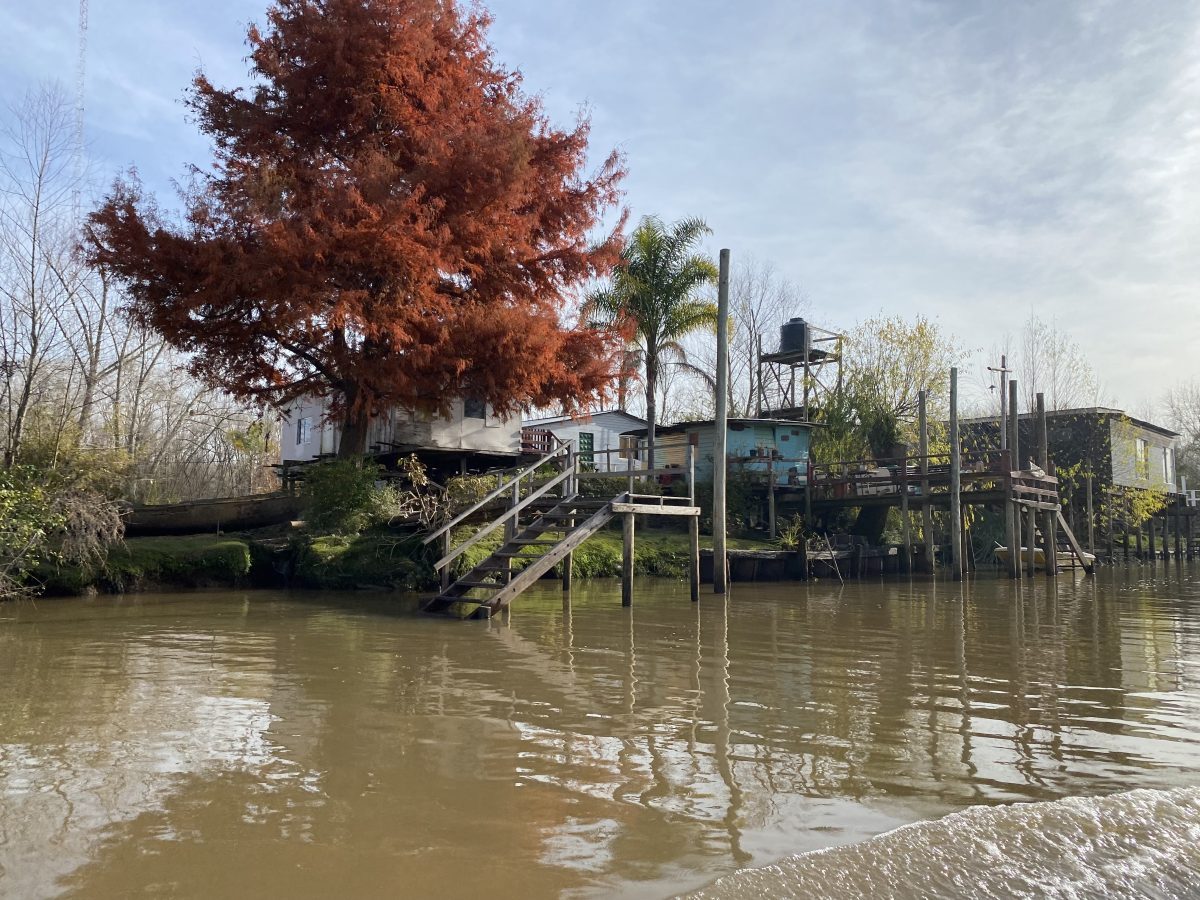
Asado in the Tigre Delta
Before we left for Argentina, I had said it out loud: I wish I knew someone so we could experience a real asado. The universe, apparently, was listening. A few days into the trip, on the bus to the Boca Juniors game — a cultural immersion that deserves its own telling — Maxi leaned in…
Keep readingContinue the Journey
Buenos Aires is best understood as the beginning of a Southern Cone journey — the city that orients you to Argentina, the ferry that crosses you to Uruguay.
Return to Argentina → in The Atlas, or cross the river to Uruguay →
Join The Inspired Lens → for early access to the Reading Buenos Aires guide and ongoing observations from the studio.
Buenos Aires holds one of South America’s most significant concentrations of Art Nouveau and Art Deco architecture — explored in the Art Nouveau → entry in the Architecture Style Guide.